Product Features
- 1. Application Scenarios:
- 2. 1. R&D and Manufacturing of Power Supply Equipment
- 3. Scenario Description: An indispensable tool for manufacturers of power modules, inverters, charging piles, Adapters, etc., in product design, prototype verification, final inspection of production lines and aging processes.
- 4. Performance Testing: Test various performance indicators of power supply equipment such as voltage regulation accuracy, load regulation rate, dynamic response, efficiency, harmonics, ripple, etc.
- 5. Aging Test (Burn-in): Let the product run for a long time under full load or overload conditions to screen out early failed products and improve the quality of ex-factory products.
- 6. Reliability Test: Simulate extreme power grid and load conditions to assess the reliability and durability of products.
- 7.
- 8. 2. New Energy Industry
- 9. Scenario Description: Used to test photovoltaic inverters, energy storage converters (PCS), on-board chargers (OBC), etc. in the fields of photovoltaics, energy storage, electric vehicles, etc.
- 10. MPPT Efficiency Test: Simulate the IV curve of photovoltaic panels to test the maximum power point tracking efficiency of photovoltaic inverters.
- 11. Grid-connected Test: Test whether the inverter meets the grid-connected requirements of the power grid (such as low voltage ride through, anti-islanding effect).
- 12. Charge and Discharge Test: Conduct complete charge and discharge cycle tests on energy storage systems.
- 13.
- 14. 3. Research Institutes and Certification Bodies
- 15. Scenario Description: Universities, research laboratories and third-party quality certification bodies (such as TÜV, UL) use it as a standard test platform.
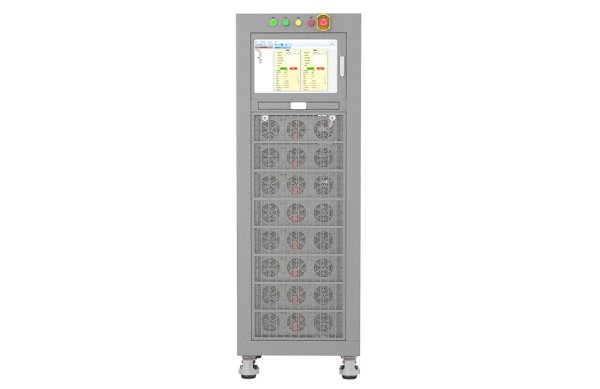
Table1DC Side Electrical Characteristics
| Parameter Name | PC-HSBT120K-1K-800 | PC-HSBT120K-150-1K2 |
|---|
| Model | PC-HSBT120K-1K-800 | PC-HSBT120K-150-1K2 |
| Maximum DC Input Power (kW) | 120 | 120 |
| Maximum DC Output Power (kW) | 120 | 120 |
| DC Voltage Range (Vdc) | 30~1000 | 10~150 |
| Maximum DC Current (Adc) | 800 | 1200 |
| Voltage Regulation Accuracy | ≤±0.05% | ≤±0.05% |
| Current Regulation Accuracy | ≤±0.05% | ≤±0.05% |
| Power Limiting Characteristics | Discharge mode: 30~150V, maximum discharge current 800Adc; 150~1000V, maximum discharge power 120kW; Charging mode: 30~120V, maximum charging current 800Adc; 120~1000V, maximum charging power 120kW; | Discharge mode: 10~120V, maximum discharge current 1200Adc; 120~150V, maximum discharge power 120kW; Charging mode: 10~96V, maximum charging current 1200Adc; 96~150V, maximum charging power 120kW; |
| Group Output Characteristics | Block design, can be divided into 1-8 groups to work independently according to needs. | Modular design, can be divided into 1-8 groups to work independently according to needs. |
Table2AC Side Electrical Characteristics
| Parameter Name | PC-HSBT120K-1K-800 | PC-HSBT120K-150-1K2 |
|---|
| AC System | Three-phase four-wire (3W+PE) |
| AC Voltage Range | 323Vac~456Vac (-15%~+20%) |
| AC Current (Aac) | ≤240A |
| Frequency Range | 45~65Hz (adaptive to 50/60Hz power grid) |
| Power Factor | ≥0.97 @20%~50% output power, nominal input voltage and frequency | ≥0.99 @50%~100% output power, nominal input voltage and frequency |
| THDi | ≤3% full load | ≤5% @50%~100% full load output power |
| Forward and Reverse Switching Time | ≤10ms, seamless switching |
Table3System Characteristics
| Parameter Name | PC-HSBT120K-1K-800 | PC-HSBT120K-150-1K2 |
|---|
| Noise (dB) | ≤75 |
| Protection Level | IP20 |
| Communication Function | Standard RS485 (external communication), CAN (internal communication) |
| Maximum Efficiency | 94% |
| Standby Power Consumption (W) | <150 |
| Insulation Resistance (MΩ) | ≥10 (1500Vdc) |
| Dielectric Strength | 4000Vdc, leakage current less than 10mA, no flashover or breakdown |
| Cooling Method | Intelligent air cooling |
| Item | Specification |
|---|
| Model | TP-HSBT150K-1K2-600 | TP-HSBT150K-1K-1K | TP-HSBT150K-150-1K5 |
| Dimensions (mm) | 630×600×1710 |
| Net Weight (kg) | 200 |
| Operating Temperature | -10~50℃ |
| Storage Temperature | -20~70℃ |
| Relative Humidity | 5~85%, no condensation |
| Altitude | 4000m (>3000m derating) |
| Pollution Degree | Class Ⅲ |




 Guangdong Public Security Network Record: 44030002013568
 Guangdong ICP Filing No.: 2026071944-1